
Showing posts with label history. Show all posts
Showing posts with label history. Show all posts
Monday, 13 January 2020


Monday, 3 June 2019

Saturday, 19 January 2019
SWINGTIME 1963

Buttery sun slants through the nets
Bootees kick into light
Dad’s dependable shunter’s palms
Guide to-and-fro at my back
Terpsichore clock hours bouncing blissful
From Bill Haley’s vinyl track
On the scarlet-lidded Dansette
Toddler pendulum, Dad rocks me
From kitchen cool to living room warmth
Up, lifting, back, forward, toes pointed,
Flying gaspy giggles, you trying to sing,
Floor tilts with subsidence
From mine-shafts burrowing
Blind moles under our valley
Dropped pencils roll from the south
Towards our cramped back yard
Its draughty outhouse, crunchy coalhole
Steam train rings on rails
Shudders the triangular under-the-stairs
Vibrates my heart-space with its presence
I don’t recall the Kennedy shock
When all the world stood still
Knowing where they were,
What they were doing.
I was ready already
For the Moon landing.
How quickly it came, like the end
To my sixties swinging
Earthbound then soaring through stardust
Orbiting before the plummet
Two years later, back on the ground,
I run my fingers over those hooks
Either side the jamb painted magnolia
Echoes of where I swung without cares
Where hospital bed now fills the room
With its pulleys and chrome
When the dark blood clot moved into ours
While I was sleeping
And ate my daddy alive.
Wednesday, 28 March 2018
DISSOLUTION (Roche Abbey, 1538) - a poem

Disbelieving
On hands
and knees,
I crawl,
shielding
The
hum-bright hive,
Tilted honey
spilling unspoiled
Bees
trail a curling Kyrie
Up between
linden’s fingers
Disbelieving
that they would
Until
they came
A storm
of the king’s sending,
No
pilgrimage of grace
Tripping
me out of my habit
La belle
Roche,
Melts
into pewter, stone, timber, lead
What will
become of me?
I lick my
fingers
As the
sword descends,
Taste only
honey, blood,
Thyme from
the shadows of the kitchen-garden.
Refectorium
Buzz and
banter
Swims
into silent
No stone
unturned
Into rectangles
of hollow
Mapped matins
and misericord
Long
since sung.
Sunday, 3 December 2017
THE WINTER OF '63
The winter of '63 was the first winter I really remember as a toddler, growing up in the Dearne Valley, Yorkshire in the north of England.
I thought they would all be like this - the coldest winter of the 20th century.
I remember the snow banked up the side of our house as high as the top of the downstairs windows; the snow falling in through the back door when my dad came home from work at the station, the frozen rails and the steam from the trains in the icy air; the adventures of making snowmen, snow dogs, snow lambs, snow horses, snow igloos, snow angels; the icicles hanging from the back of the coal-house, the outside loo freezing up and the chill of the tin bath we had hanging from a nail in the back yard; the ice inside the bedroom windowpanes, with no central heating but a smelly paraffin heater upstairs; the cloak of silence over the valley as it muffled the pit hooters, the crunch of feet through the village, the bleak singing of the birds in the frozen hedgerows.
The excitement and anticipation and sheer wonder at this world of whiteness was overwhelming, untainted by dread and disappointment, with slush and slippy rinks of treacherous thaw an unknown thing for the future.
I thought they would all be like this - the coldest winter of the 20th century.
I remember the snow banked up the side of our house as high as the top of the downstairs windows; the snow falling in through the back door when my dad came home from work at the station, the frozen rails and the steam from the trains in the icy air; the adventures of making snowmen, snow dogs, snow lambs, snow horses, snow igloos, snow angels; the icicles hanging from the back of the coal-house, the outside loo freezing up and the chill of the tin bath we had hanging from a nail in the back yard; the ice inside the bedroom windowpanes, with no central heating but a smelly paraffin heater upstairs; the cloak of silence over the valley as it muffled the pit hooters, the crunch of feet through the village, the bleak singing of the birds in the frozen hedgerows.
The excitement and anticipation and sheer wonder at this world of whiteness was overwhelming, untainted by dread and disappointment, with slush and slippy rinks of treacherous thaw an unknown thing for the future.
Monday, 3 July 2017
ALL MY GRANDFATHERS GREAT: 3. The one who was an inventor and went bankrupt
 |
| My Great Grandfather, Charles the cabinet maker |
Charles Mamwell was the eighth of nine children born to Christopher, a cottager (farmer) in the tiny village of Grainthorpe, a couple of miles inland from the bleak coast of Lincolnshire and Mary Townend, a lass from the neighbouring village of Marshchapel. The year was 1839 and the new Queen Victoria had been on the English throne for two years.
Charles's ancestors had lived in Lincolnshire, farmers, builders, fishermen since at least the 1590s. He was apprenticed as a cabinet maker and to better his employment prospects, moved north to the steel city of Sheffield in the West Riding of Yorkshire, at the height of the Industrial Revolution in the early 1860s.
There Charles met and married Elizabeth Oldfield, niece of Sheffield philanthropist and businessman James Howarth, an Edge and Joiner's Tool Manufacturer, her mother's elder brother who had founded the firm Howarth and Sons. Charles must have felt at the top of his game, with premises on Fitzwilliam Street and later a shop on Queen's Road at Heeley.
One of his nephews, his brother William's lad from Grainthorpe, came to Sheffield to learn the cabinet making craft from Charles as his apprentice at the beginning of the 1870s. However, this nephew, William, never became a rival cabinet maker in the city. Instead he wandered the country doing various carpentry jobs, before ending up in Blackpool, on South Beach, where he set himself up as a phrenologist with the tag-line: "Prof W. Manwell (sic); private sessions 1s/6d". Bump-feeling was a popular pseudo-science at the time.
Back in Sheffield, Charles and Elizabeth had three daughters: the eldest a skillful left-handed hosier and draper called Helen and her younger sisters Alice, a midwife and Ada, a cook. Another child, a son called Charles Arthur Oldfield Mamwell died in infancy of convulsions. Charles travelled back to visit his folks in his native Grainthorpe regularly, and his younger children were baptised in the Parish Church of St Clement's there in the village.
Helen was born with a facial birthmark which, by the estimation of those times, disfigured her. Wanting the best for Helen, Charles paid for treatment from what we might call a 'quack' doctor, which must have cost him very dearly. Not long afterwards, he declared bankruptcy. The sad saga of his creditors and debts I discovered in the pages of the Sheffield newspapers, in stark contrast to the joyful announcements of his marriage to Elizabeth only a few years before.
This 'treatment' left Helen so damaged that she was compelled to wear a veil over the affected side of her face for the rest of her short life. Gradually, her face was eaten away as the mole grew cancerous and she eventually died at the age of 47, after many years of stoical suffering while carrying on her drapery business at a shop in Broomhall, of carcinoma of the larynx. Charles did not survive to see the final years of Helen' life, perhaps mercifully, as he never forgave himself for his well-intentioned intervention.
Two years after the death of their infant son, Charles' first wife Elizabeth also died at the age of 35. You can trace the course of Charles' grief by looking at his writing in the family Bible, where he recorded all the births, deaths and marriages of his family in the middle pages under tissue paper inserts. In the days before Elizabeth died, his looping copperplate script is a thing of beauty. Later, the letters crowd and sag, reflecting his grief and despondency as his life spiralled down from those first hopes and dreams.
Alongside his cabinet making, Charles was an inventor. He invented a hinge for a school desk. It never rains but it pours. When he showed his design to a man who promised he would take it to patent it for Charles, this same charlatan stole the design and passed it off as his own. I inherited the article in a newspaper cut out and saved by my great grandfather, praising this other man for "his" ingenious invention. One more nail in the coffin of Charles's high hopes of success and security for himself and his family. I also have his prototype model of the hinge, still in the original buff envelope in which he kept it ready to make his family's fortune, and an oak chest with his business plate lovingly hammered into the dovetailed wooden joinery.
 |
| Elizabeth Thompson Mamwell, b 1848, my great grandma and Charles' second wife |
Charles hired another Elizabeth, Elizabeth Thompson, a cobbler's daughter, to help look after his young girls when he was widowed. My great grandmother was a sunny, capable, humorous lass, and they fell in love and married the following year. They went on to have another two daughters and, finally, a surviving son, my maternal grandfather, Chris, born in Tipton Street, Wincobank in 1889.
They moved further out into the Sheffield suburbs, to Chesterfield Road, Norton Within, where, at the age of 63, Charles died of apoplexy, a broken man. He is buried with Helen and my great grandma in the cemetery at Norton Lees, overlooking the gorgeous Peak District that was the backdrop to his hopes and his hardships.
Sunday, 2 July 2017
ALL MY GRANDFATHERS GREAT: 2. The one who spelled his name wrongly and whose bones went to chalk

The second tale of my grandfathers great kicks off a little further south, in the Erewash Valley in the English Midlands, on the border between Derbyshire and Nottinghamshire.
Last blog, you met my ancestor Thomas Barrass. My other paternal Great Grandfather was James Ellis, born in Awsworth in Nottinghamshire in 1874, the eldest boy in a family of eight siblings in a mining family in a mining community.
I have no photos of James, but I'm told he was tall and spare, and according to my dad's cousin, I am the spitting image of him, which I take as more of a compliment than she perhaps meant it to be!
The nearest I can come to knowing what he looked like, short of looking in the mirror and cutting my hair in a short back and sides from the start of the last century, are these photos of James's younger brother William Henry, whose lovely granddaughter I went to school with, still my dear friend, who lent me this picture:
 |
| William Henry Ellis, my great granduncle b 1884 in WW1 |
James worked as a miner down the pits of the Nottinghamshire Coalfield and married a local lass, from nearby Ilkeston, Mary Ann 'Big Polly' Stenson. The Stensons had given their name to Stenson's Lock on the Erewash Canal, as many of Polly's ancestors had worked on the canal as wharfingers and lock keepers. They had two children, my paternal grandma Mary Elizabeth 'Little Polly' and her younger brother Lambert. Sadly, Lambert died of tubercular meningitis and exhaustion when he was just six years old. James was present at the death in Nottingham General Hospital. There were no more children, and I grew up imagining my grandma was an only child, like me.
When the Barnsley coal seam was discovered in the later years of the nineteenth century, new pits began opening on the South Yorkshire coalfield. Some of James's family, including some of his brothers and inlaws, moved north to work in these new areas. James and his two Pollys, big and little, left the scene of the loss of their beloved Lambert and settled close to where his relatives were already telling stories of Yorkshire hospitality, in the village of Goldthorpe, nestled in South Yorkshire's Dearne Valley.
James worked as a dataller (a worker hired or paid by the day) at Hickleton Main colliery until crippling rheumatoid arthritis confined him to a water bed upstairs in their cramped terraced house. He never left that bed again. As my gran always told me:
"His bones went to chalk"
which I learned as a fact till his death certificate told me the full truth many years later. Cerebral hemorrhage, arteriosclerosis and his long-term rheumatoid arthritis ended James' life at just 56 years old.
He is buried in Bolton-on-Dearne cemetery with his Polly and close to other members of the family. From the Erewash Valley to the Dearne Valley. My grandma was always proud of her Ilkeston roots, and so am I. Going back there once I had unravelled the history was one of the most moving of my genealogical adventures. I can't explain how much it felt like home from home.
One bonus discovery I made along the journey to discover my great grandfather's story: James's elder sister Charlotte was aunt by marriage to the successful and popular Ilkeston-born jockey, Elijah 'The Whippet' Wheatley, who won the 1913 St Leger on Night Hawk, and married famous music hall star Marie Lloyd's sister Maud. We genealogists have to grab our claims to fame with both hands, whenever we find them, you know!
 |
| Mary Elizabeth "Little Polly" Barrass, nee Ellis, my paternal grandmother, only surviving child of James Ellis and Mary Ann "Big Polly" Stenson Ellis |
Saturday, 1 July 2017
ALL MY GRANDFATHERS GREAT: 1. The one who worked with horses, dreamed of sheep and kept secrets
 |
| Yours truly at Huggin Carr, Hatfield Woodhouse near Doncaster in 2003, where my great grandfather Thomas Barrass worked as a farm lad in 1871 aged 14 |
Family history is so giddily glorious! (At least, it is to those of us who have ever been bitten by the genealogy bug!)
Years of trawling round gusty graveyards, scrutinising old photos, traipsing round records offices, perusing births, marriages, deaths, going cross-eyed over newspaper cuttings, chasing up family rumours, and I feel like I know many of my kin from a bygone age.
Can't text them. Can't email them. Can't Skype them.
But I feel like I know many of my ancestors better than I know some of my living friends and family! They run through my dreams. They inhabit my heart. They echo through my writing.
My four great grandfathers are right up there, jostling for attention, to be known and named and nattered about, long after they died in the days before I was born. Like the best of friends, I'd like to introduce them to you. Grab a cuppa - incoming series of four!
First there's Thomas, the one who worked on farms with horses and narrowly avoided causing me to be a Bottom. Thomas Barrass was a man of many secrets.
I have no photos of Thomas. No photographs of my dad's side of the ancestors survived the bonfires kindled by one over-zealous married-in relation who decided, after my grandfather's death, that tidy drawers and clean breaks were preferable to pictures of your husband's unknown Victorian ancestors grinning back at you in sepia.
The family rarely spoke about Thomas. He was born in 1857, in a run-down area of Hull near the docks called Chaffer's Alley, long since swept away by slum reforms. This was where his mother Charlotte's ancestors had been mariners and keelmen, shuttling between the port and the canals and waterways they called home for generations.
Thomas was born under a double shadow. No father was named on his birth certificate. The shame that went with that in the past is hard for us to grasp today. Only a year earlier, his mother had been in the farmhouse when her grandmother, a Yorkshire farmer's wife and daughter of a seafaring man, slit her own throat with a penknife while suffering from 'melancholy' on a cold winter night while lying in bed next to her husband of half a century. That tragedy split and scattered Thomas's family.
His mother hastily married a kind man who seems more than likely to have been Thomas's father, a yeast and bacon dealer, a cordwainer's son from a tiny village near Doncaster, as soon as she was free from the responsibility of caring for her devastated grandfather, after whom Thomas was named. They married at Thorne Register Office in October 1861, a matter of weeks after Charlotte's grandfather passed away. Had the marriage taken place a few years earlier, Thomas's descendants, myself included, would not have inherited his mother's surname, Barrass, but that of his putative father, Bottom. I'm truly thankful for small mercies!
When he was just seven, Thomas's mum died from galloping tuberculosis just before her thirtieth birthday. Little Thomas was like the cuckoo in the nest when his widowed father wed again, going on to have many more children who bore his own blushfully preposterous surname. (Sorry, Bottoms up!)
Thomas worked as a young lad on local farms. He had a special affinity for horses. He had less affinity for writing, as his childlike spidery signature in the marriage register shows. He made up a name for his father (his own name) and put 'tailor' as his father's profession, grasping at the idea, perhaps, because his mother was a seamstress and dressmaker.
He soon felt the wanderlust that ran in his veins, but instead of sailcloth and tide, he followed the call of the earth from his great grandfather's farming blood. Thomas moved away from the flat farmland around Doncaster to the hills and valleys near Barnsley, first to Bolton-on-Dearne, where he married a lass whose relatives were, in contrast to Thomas, chatty, jokey, confident, open.
Thomas and Eliza had ten children, including twins and my paternal granddad. How they all subsisted in a tiny tied farm cottage at the bizarrely-named 'Rockley Bottom' near what is now Worsborough Country Park, is an enduring mystery. In fact, Eliza didn't survive for long. At forty-seven, after another short move to Upper Hoyland, cerebral meningitis snatched her from Thomas's side. This new blow left him struggling to bring up his large family alone. The eldest girl, Blanche, became a mother figure to her younger siblings.
 |
| Luke and John (Jack), twin sons of Thomas b 1893 |
Newly bereaved, Thomas decided, along with many other Yorkshiremen of the day, to seek his fortune at the other side of the world. The Patagonian sheep farming boom was still a draw for struggling agricultural labourers of the Old World. Thomas is listed in the ship's manifest as "Thos Barries", shepherd, travelling steerage to Punta Arenas (as his son Joseph told his own son Joe) on 27th September 1906 from Liverpool on the "Oriana" with many other farmers and shepherds. Eliza had died in April the year before.
It seems an unlikely move for an unambitious soul like Thomas, but life had already thrown all it could to scupper his happiness - suicide, illegitimacy, rejection, widowhood, poverty. He had very little left to lose. So he sailed to Chile's Punta Arenas, bound for Argentina in the early years of the new century to seek his fortune on the sheep farms, opportunities offered as an incentive to emigrate in the local newspapers at the time. But he soon returned to South Yorkshire. The best of the boom was long past. It wasn't the first boat Thomas had missed.
In his declining years, Thomas seems to have been a regular guest at the seasonal celebrations of his children's families, particularly his twin sons' families in Ackworth, a taciturn ghost at the feast, giving little away, of words or goods.
I learned from a cousin of my dad's, one of the twins' children, how Thomas was a man of very few words. No wonder. He had so many secrets to keep, not least suicide and bastardy, which in those days attracted discrimination and judgment from society.
His wife Eliza's family, the Wrights, used to tease Thomas, get him drunk, mock him, emphasising his otherness in their eyes. Dad's cousin, a child in the 1920s, remembers Thomas jingling half a crown in his pocket for ages, a coin his grandchildren thought he was going to give them as a treat before he left for his own cottage. As he left, having eaten and lodged for free over Christmas, he would grudgingly give them just a few pennies instead. They saw only a miserly freeloading old man. As a more distant descendant with the fuller picture laid out in the branches of my family tree, I have the luxury of judging him less harshly.
By 1911, Thomas was living with his son, my granddad, in Goldthorpe, in retirement from his labouring, but he did not stay in one place for long. He moved to his last home on Longfields Crescent in Hoyland, near to where his youngest child, Grace, lived with her husband and children in a caravan, not far from where Eliza had died. Perhaps our love of compact living spaces, be it caravan, cottage or cabin, stems from Thomas's roots living aboard the Humber keels that were home to many generations of the Barrass family. His ancestors founded the keel community that grew up around Stainforth on his Barrass side, and were Thorne mariners on his Pattrick side. Blood and water - canal water, that is - are equally thick in our family!
Thomas died in the building used as the Barnsley Workhouse on Gawber Road, that later became St Helen's Hospital, now part of Barnsley District General Hospital. It was the summer of 1928, and Thomas was 71, suffering from the cardiovascular troubles common in his side of the family. His cause of death was given as valvular disease of the heart.
Many years ago, as I began to dig into our family history, I discovered how deeply hidden Thomas's roots lay. When I asked him the routine starter question about his grandparents' names, my father could only say, frowning in puzzlement,
"I have an idea they were William and Mary..."
That's all Thomas was for many years. Eliza too. Forgotten. Misunderstood. Question marks in the dim distance of time. The ancestors before them, too, were obscured by fogged opaque glass. Tragedy had sent them scuttling for cover, for anonymity, even to their own.
That's why I think telling our ancestors' stories is so healing and so important.
One great grandfather down.
Three to go.
Join me here on 'Pinwheels and Rainbows' tomorrow for the next.
 |
| Exploring my waterways roots on the West Cut Bank in Stainforth, near Doncaster, where Thomas's mother Charlotte and generations before and after her were born around the Stainforth & Keadby Canal |
Tuesday, 23 May 2017
THOSE TOMORROWS - in memory of Manchester

You can't unsay one word you've sown
You can't call back the shade you've thrown
Unfling one fragment of shrapnel flown
Can never recoil from the hatred snarled
Or bask in a bubble in a broken world
You can't backpedal once the tree is split
Unspill the milk when you curdle it
You can't retract and you can't retrace
The spiral down from this burning place.
The coward whimpers.
But courage cries:
My broken won't weaken to bitterness
My shattered won't melt into caring less
My outrage won't turn me to hate or hit
This awful day
I will live through it.
I will not be changed by revenge or rage
Nor fold my arms nor turn the page
I won't be diminished by fear or dread
Betray the innocence of the dead.
I will make those tomorrows they can't now see
As full of true love as they'd want them to be.
Link to Fundraiser to support families of those killed and injured in the Manchester Arena attack
Monday, 17 April 2017
WICKERSLEY'S HISTORIC BUILDINGS: IN REALITY AND IN FICTION
 |
| The Round Houses on Wickersley's historic Morthen Road near Rotherham, South Yorkshire, UK |
Above are the Round Houses on Wickersley's Morthen Road as they are today.
I used the local geography as one of the backdrops for my novel 'Goatsucker Harvest' set in 1855.
These gorgeous buildings, once used as a place of worship and a shop, now private dwellings, are the ones that catch our heroine Thirza Holberry's eye and fire her imagination as she is waiting for Lucas to collect the new millstone from the quarry to cart back to Thirza's grandparents' windmill on the outskirts of Thorne and Hatfield Moors near Doncaster.
The quarries were one of lovely Wickersley's claims to fame, once renowned for their high quality "Wickersley Rock" sandstone. Their excellent grindstones were in demand for Sheffield's cutlery industry and exported worldwide. You can still see grindstones scattered around Wickersley and in the village there are still many beautiful old houses and walls built of the local stone.
"To while away the time, Thirza set out to stroll the length of what she imagined was the main street, back towards the parish church of St Alban. She gazed at a pair of unusual bow-fronted cottages and puzzled how the occupants chose furniture that would bend to the shape of the room. Or did they design their own? It must be like living in a windmill, only a windmill cut in half." - Joyce Barrass 'Goatsucker Harvest' ch 25 "Grindstones and Goatsuckers."
Here's St Alban's Parish Church. As Lucas says in the book, the top of the tower is the highest spot between Sheffield and Bawtry and used to have a lantern lit on top to guide travellers by stagecoach in the nights before streetlamps made night like day!
 |
| St Alban's Parish Church, Wickersley, from Church Lane |
In the story, Thirza is hoping for a quick getaway from the stifling summer heat as she wanders around the village, but Lucas has met his friend from the Old Hall and is getting more than a little merry and incapable of driving their carriage, as he takes more than one drink at the Needles Inn (now Wickersley Social Club, still an excellent venue for a pint or two!)
 |
| The former Needles Inn, now Wickersley Social Club |
The Gazebo in the grounds of Wickersley Grange beside the Inn, is a listed building reputed to have been where passengers would wait for the stagecoach, dating from the early eighteenth century. More info here on the Historic England website.
 |
| The listed Gazebo, just east of Wickersley Grange |
Wickersley Old Hall is still standing proud nearby on the opposite side of the road from pub and gazebo, the road across which Lucas staggers dangerously drunk in my novel. Today, it has been converted into flats.
 |
| Wickersley Old Hall, south face |

Friday, 5 February 2016
The tragedy of the "Amy Isabel," North Sea fishing smack, 6th Feb 1897
 |
| 'STORM AT BRIDLINGTON QUAY, EAST RIDING OF YORKSHIRE, 10 FEBRUARY 1871' by John Taylor Allerston (1888) original painting now displayed in the Sewerby Hall Museum & Art Gallery
This week marks the anniversary of the natural disaster this dramatic image captures, the 'Great Gale' that struck the East Coast of Yorkshire in the stormy February of 1871.
One of my own ancestors, George William Barrass (1864-6th February 1897) was also drowned in a February storm. He drowned when his boat was hit by a freak wave 70 miles NE by ENE of Spurn Point in the North Sea fishing grounds some call the "Silver Pits". He and his brother were aboard a small craft boarding fish onto the fishing smack "Amy Isabel."
His youngest brother Samuel Barrass was saved from the capsized boat and both made it almost as far as the rescue ship. But when young Sam looked back, his brother had gone under. The sea takes no prisoners and his body was never recovered.
The repercussions and ripples from the sad event went on, and Samuel was one of the witnesses at the subsequent inquiry. His testimony makes the event live again in all its vivid and tragic detail. Below are a couple of the documents that survive of the reporting at the time.
Here is an earlier blogpost I shared with more details of the event and the ancestry I share with the victims.
|

 |
| 'Daily Mail 18th March 1897 |
Thursday, 26 November 2015
Horse Marines and history-based fun and fantasy in my fiction
 |
| The last Mexborough Horse Marine, Tom Rawnsley, with his horse on the towpath at Sprotborough, South Yorkshire. (Picture credits and respect to The Humber Keel & Sloop Preservation Society, taken from Fred Schofield's wonderful book "Humber Keels and Keelmen" published by Terence Dalton Limited, Lavenham, Suffolk, 1988) |
A few of my own waterways ancestors, who give me lots of inspiration for my writing, also worked as boat haulers along this stretch of the South Yorkshire Navigation. I thought readers might enjoy this photo of the last Horse Marine working from Mexborough, Tom Rawnsley, pictured here with his horse on the towpath at Sprotborough to get you in the mood for the drama, intrigue and history-based fun and fantasy in my fiction!
You can keep up with me on Facebook Joyce Barrass - Author, Twitter or my Goodreads author page. Thanks so much for stopping by!
Saturday, 11 July 2015
Set sail down the South Yorkshire canals of yesteryear!
You look like you might need to de-stress and chill out for a while on a calming canal!
Here you can watch a wonderful historic film clip of
a voyage down the Yorkshire canals where my novel "Goatsucker Harvest"
is set. You'll see the Stainforth & Keadby Canal, the River Don
and the watery world where "Thistle" would have sailed on
her regular round trips from Hull to Sheffield. You even get a
glimpse of Conisborough Castle from the water in the extended version of the archive film, just as Thirza
remembers in the book!
All aboard for your 1959 trip on the
waterways, or travel back to 1855 to experience this beautiful
landscape in the pages of "Goatsucker Harvest." Enjoy!

Friday, 24 April 2015
Goatsucker Harvest: "Mother Seacole. I'm shattering. Shivering in shards like glass"
 |
| Mary Seacole (1805-1881) |
"Mother Seacole. I'm shattering. Shivering in shards like glass."
- "Goatsucker Harvest" Chapter 22 'Ravage and Ruin' (c) Joyce Barrass 2014
In "Goatsucker Harvest," Jem Kitson, the traumatised Crimean veteran, invalided home to Yorkshire after the Charge of the Light Brigade, recalls the tender care of Mary Seacole, the nurse who was unsung heroine of the Crimean battlefields, her story often overshadowed by history's halo around her contemporary, Florence Nightingale.
This programme on 'YouTube' gives a dramatised insight into "Mary Seacole: the Real Angel of the Crimea" and gives an intriguing glimpse into the background to my novel and the events that bring Jem home a broken man.
Mary Seacole Part 1
Mary Seacole Part 2
Mary Seacole Part 3
Mary Seacole Part 4
You can discover more about my novel on this blog, or purchase it from Amazon in the UK here or in the USA here or in Australia here.
Monday, 12 January 2015
Goatsucker Harvest: The watery wonderworld of the Humber Keel


Thirza clung onto the tiller kicking against her, the neck of a huge oaken sea-monster butting her in the ribs. The calls of keelmen and women, wharfingers, the cough of wind in sailcloth, had been her lullaby since before she was born. Voices of salt and shimmering rainbows of sound whispered all around her. She'd heard it all from the snug shelter of her mother Dinah's womb. Back then she couldn't tell the womb's throbbing walls from the sea swell beyond. But she knew they were both her home." -(c) Joyce Barrass (2014) 'Goatsucker Harvest' Kindle Edition.
"Thistle," the Humber Keel in 'Goatsucker Harvest,' I named after the boat on which my 3x great grandfather, Samuel Barrass & his family were captain & crew on the night of the census 1881. I come from a long line of Barrass & Pattrick mariners, sailmakers, keel and sloop families from Doncaster, Stainforth, Thorne & Hull. They were born, lived, worked, played and often died afloat on canals such as the Stainforth & Keadby. They inspired much of Thirza's story, as the book's dedication reveals.
I've had the joy of sailing on the restored-to-sail Humber Keel "Comrade" a few times, between Ferriby Lock & Hull. You'll see Comrade's mainsail & topsail on the cover of the book, one of the many photos I snapped while aboard. I even took a turn at her tiller under the Humber Bridge! As the skipper, Colin, wryly quipped: "Your Barrass ancestors would be turning in their graves!" Maybe. Though quite a few of them came to a watery grave down the years, faceplanting off boats, drowning, choking in the mud, colliding with the quayside or getting accidentally knocked senseless by the yardarm. At least I didn't ground her (quite!).
It was such a thrill & privilege to taste what my family's and Thirza's lives were like on the Yorkshire waterways. That's thanks to the amazing volunteers of the HKSPS - 'The Humber Keel & Sloop Preservation Society'. See more photos & info on these historic ships on their site Humber Keel & Sloop Preservation Society website & FB page HKSPS Facebook page!
The Yorkshire Waterways Museum at Goole (the "Venice of the North"!) is also a wonderful place to visit to learn more about this watery wonderworld.

Thursday, 8 January 2015
Goatsucker Harvest: The windmill - titillation, torment and terror?
 |
| The old "jog-scry" aka "joggle screen" or "jiggle screen" at Quainton Windmill in Bucks (from the Quainton Mill Website) |
Above you see a rare example of a "jog scry" or joggling/jiggling screen used in some windmills as a flour grading machine before the invention of wire screens.
The Jog-Scry in Kitson's Windmill in Goatsucker Harvest inspires one character profoundly. Too profoundly, perhaps. It arouses memories and secret, sinister associations in him that have devastating consequences for the people of Turbary Nab.
Disturbing changes are afoot. Humble, run-down Kitson's Windmill is about to become transformed. The unsuspecting townspeople of Victorian Doncaster and beyond are about to encounter something monstrous on their calm horizon. The ancient alchemy of the peat marshes of South Yorkshire is about to be unleashed!
Download "Goatsucker Harvest" now on your Kindle (if you dare!)
[Below are the earthbound remains of some of the local windmills that were in the author's imagination when she was writing about the area with a fictional glow.]
 |
| Thorne Windmill by F.W. Jackson |
 |
| Fishlake Windmill near Doncaster |
 |
| West Nab Windmill, Fishlake near Doncaster |
 |
| Lings Windmill at Hatfield Woodhouse, Dunscroft near Doncaster |
 |
| Thorne Windmill near Doncaster |
Wednesday, 7 January 2015
Goatsucker Harvest: Under the Rainbow Hoops of Bram's Duck Decoy
.jpg) |
| Screens in a duck decoy in nature reserve 't Broek near Waardenburg, the Netherlands (China_Crisis) |
It felt so natural to her, she hardly realised how Bram was guiding her with his eye. Thirza found she understood the signals that passed between man and dog, even though the meanings behind the strange names and words were lost in the mists of time."
- (c) Joyce Barrass 2014 - Goatsucker Harvest (Kindle Locations 2627-2630) Kindle Edition.

Bram's Duck Decoy or Eendenkooi (Dutch for "duck cage" in the old language of Bram's ancestors who were decoymen before him), is far out on the marshes and peat bogs, somewhere on the misty edges of the novel's level landscape, between Yorkshire and Lincolnshire.
The villagers of Turbary Nab avoid the Decoy now. Some have forgotten its whereabouts. Some never know them. Others dare not venture out in that direction, where the unpredictable fen-lights, the ignis fatuus, the deceptive glow in the dark of the atmospheric ghost lights flicker over the boggy marshes of the peat fen and moors that are Bram's home, leading the unwary off the beaten track to a fate beyond dread.
Traditional Duck Decoys were devices used to entice wildfowl, for food or in latter days for ringing, constructed with a central pond with between one and eight tapering, radiating arms, surrounded by wooden hoops and netting. These are the "pipes" after which Piper, Bram's faithful kooikerhondje is named (click link for my blogpost about him). First recorded in Bram's ancestral Netherlands in the sixteenth century, the idea of the duck decoy was imported to the fens and wetlands of Britain.

(c) Joyce Barrass 2014 from Goatsucker Harvest (Kindle Locations 808-810) Kindle Edition.
No killing, hunting or even ringing in Bram's Decoy, though, as the little Teal will discover. Under the rainbow hoops, Bram's lore is the mysterious "Reversal of Ravage", the "Omkering van Schade" passed down to him from his forebears, who came over with Cornelius Vermuyden in the days of King Charles to work on The Great Drainage of the flooded fens.
Decoy ducks were traditionally carved from wood or cork and stained in plumage colours to fool the wildfowl. Bram's decoy ducks are crafted in quite another way, so much more than the sum of their driftwood and clockwork parts.
But in the mid-Victorian world of "Goatsucker Harvest", in the wake of the Industrial Revolution, these secrets are much sought after by others. Those for whom the fragile environment of the moors and marshes means nothing compared to profit and fame. Soon, for the inhabitants of Turbary Nab, nothing can ever be as it was.
Watch a YouTube video of a modern Dutch decoyman & his kooikerhondje (just like Piper in my novel!)
More footage of a decoyman & dog in Holland (1974)
Discover the mysteries of "Goatsucker Harvest" for yourself on Kindle


Friday, 2 January 2015
Goatsucker Harvest: Picturing your characters - Bram & Piper

I first saw a duck decoy in Doncaster Museum and the spark of an idea for Bram was born. But unlike duck trappers of old, Bram lives by a different principle: the ancient lore of his own people, descendants of the Dutch drainage engineers who came over in the 17th century with Cornelius Vermuyden to drain the peat bogs in Doncaster area and the Fens of East Anglia. His mission is the "Reversal of Ravage", "Omkering van schade" passed down through Bram's ancestral line. But there are those on the horizon who have other ideas.
Uncover the mysteries of the South Yorkshire peatland moors and meet Bram for yourself in GOATSUCKER HARVEST (Kindle Edition)
Tuesday, 26 July 2011
Cusworth Hall: Butterflies and Bumble Bees, and what the Butler saw!
If you happen to be passing CUSWORTH HALL near Doncaster today, be sure to check out their BUTTERFLIES AND BUMBLE BEES event this afternoon. The weather seems to be fine today, in spite of a spot of summer rain earlier!
Boring old M.E./CFS has spat on my attendance chances, but don't miss yours!
I have a bit of a vested interest in Cusworth. My poor long-suffering friends and family will know this by heart, but in case you don't, my link is this: my paternal great gran, twin Eliza Barrass, nee Wright (1857-1905) had a sister Lucy, the baby of the family born in 1865.
Lucy married the love of her life, Charles Betts, on 22nd December 1890 in her native Warmsworth, at the little church now demolished and its site entombed under the M1 motorway!
Charles became the butler ("You rang, Milady?") to Lady Isabella Battie-Wrightson, her ladyship at Cusworth in the early 20th century. Lady Isabella presided over the Hall in the last of its glory days before it passed after her death to the last squire, Robert Cecil Battie-Wrightson, pictured here in Doncaster:
Charles Betts, a dapper little man, judging by the existing photos, came originally from Thorne and moved to Warmsworth where he met and married my great grandaunt Lucy. As butler to Lady Isabella, Charles moved into The Lodge, the gatehouse at Cusworth with his family.
They can be seen outside the Lodge c1908. In this photo, you can see great grandaunt Lucy (who sadly died shortly after this photo was taken, aged only 42, of colon cancer and cardiac failure in Doncaster Royal Infirmary), their daughter Mary Ann, who became a housemaid at the Hall, and Charles himself.
Daughter Mary Ann worked at Cusworth Hall until after her marriage to Richard Ormerod Walshaw in 1936. The Betts family is mentioned in some of the excellent Cusworth guidebooks available around Doncaster, including the one that includes these photos, and another, 'Caring for Cusworth: servants recall a bygone era...' by Alison Morrish, the Curator at Cusworth when that book was produced in 1982. I bought mine, giddy with joy as I spotted the name Betts and this photo of Lucy looking the very image of a Barrass, at Doncaster Museum and Art Gallery .
Another photo in Gordon Smith's book, shows Charles (if I'm recognising his distinctive features rightly!) at Lady Isabella's right hand side, enjoying one of the Hall's famous fancy dress balls before the Great War. Her Ladyship is enthroned as a rather magnificent Britannia!
During the First World War, Charles Betts was caught on camera when Lady Isabella entertained the King's Own Yorkshire Light Infantry at Cusworth. My paternal grandfather, Bruce Aaron Barrass, (1891-1973) was in the same regiment. I wish among granddad Bruce's endless loquacious stories of the past, which so fascinated me as a child, he could have spoken about his uncle Charles, butler at Cusworth Hall! Instead I had the fun of discovering this rich vein of ancestry for myself!
If like me, you've missed those bees and butterflies, don't waste the opportunity through the summer of spending some time with your family, or just relaxing on your own, exploring Cusworth's beautiful and interesting Hall set in its peaceful rolling grounds with magnificent trees, lawns and soothing water features.

Cusworth Hall is one of the real precious jewels in Doncaster's battered but beautiful crown!
Some more info on this link
and on Cusworth Hall's own excellent website: http://www.cusworth-hall.co.uk/
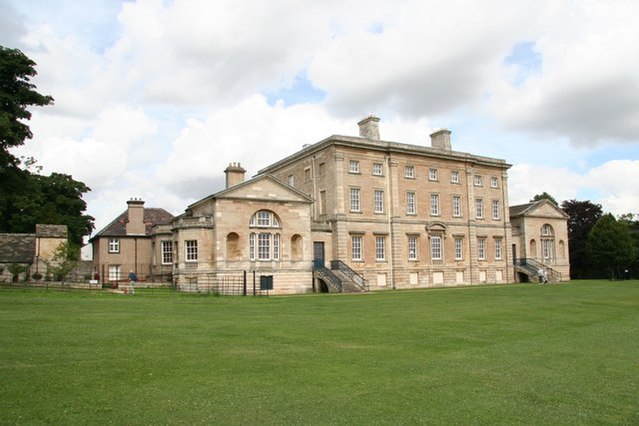 |
| Cusworth Hall near Doncaster |
Boring old M.E./CFS has spat on my attendance chances, but don't miss yours!
I have a bit of a vested interest in Cusworth. My poor long-suffering friends and family will know this by heart, but in case you don't, my link is this: my paternal great gran, twin Eliza Barrass, nee Wright (1857-1905) had a sister Lucy, the baby of the family born in 1865.
Lucy married the love of her life, Charles Betts, on 22nd December 1890 in her native Warmsworth, at the little church now demolished and its site entombed under the M1 motorway!
Charles became the butler ("You rang, Milady?") to Lady Isabella Battie-Wrightson, her ladyship at Cusworth in the early 20th century. Lady Isabella presided over the Hall in the last of its glory days before it passed after her death to the last squire, Robert Cecil Battie-Wrightson, pictured here in Doncaster:
 |
| Robert Cecil Battie-Wrightson in Doncaster |
Charles Betts, a dapper little man, judging by the existing photos, came originally from Thorne and moved to Warmsworth where he met and married my great grandaunt Lucy. As butler to Lady Isabella, Charles moved into The Lodge, the gatehouse at Cusworth with his family.
They can be seen outside the Lodge c1908. In this photo, you can see great grandaunt Lucy (who sadly died shortly after this photo was taken, aged only 42, of colon cancer and cardiac failure in Doncaster Royal Infirmary), their daughter Mary Ann, who became a housemaid at the Hall, and Charles himself.
 |
| Lucy Betts nee Wright, my great gran Eliza Barrass's youngest sister, her daughter Mary Ann and husband Charles circa 1908 outside their home, The Lodge of Cusworth Hall. The Hall itself is visible though the gateway arch, while the Betts family lived rather more humbly behind those net curtains! The original photo of which this is only a scan, can be found on p 42 of the wonderful guidebook 'Cusworth Hall and the Battie Wrightson Family' and remains copyright of its author Gordon Smith. I was overjoyed and overwhelmed to discover it quite by sweet serendipity while researching my own family history. |
Daughter Mary Ann worked at Cusworth Hall until after her marriage to Richard Ormerod Walshaw in 1936. The Betts family is mentioned in some of the excellent Cusworth guidebooks available around Doncaster, including the one that includes these photos, and another, 'Caring for Cusworth: servants recall a bygone era...' by Alison Morrish, the Curator at Cusworth when that book was produced in 1982. I bought mine, giddy with joy as I spotted the name Betts and this photo of Lucy looking the very image of a Barrass, at Doncaster Museum and Art Gallery .
Another photo in Gordon Smith's book, shows Charles (if I'm recognising his distinctive features rightly!) at Lady Isabella's right hand side, enjoying one of the Hall's famous fancy dress balls before the Great War. Her Ladyship is enthroned as a rather magnificent Britannia!
 |
| Fancy Dress Party at Cusworth Hall prior to WW1, showing Lady Isabella and everyone on the Cusworth Estate, including my ancestors the Betts family. Scan of original photo on p 43 of 'Cusworth Hall and the Battie-Wrightson Family' copyright Gordon Smith, Doncaster 1990. |
During the First World War, Charles Betts was caught on camera when Lady Isabella entertained the King's Own Yorkshire Light Infantry at Cusworth. My paternal grandfather, Bruce Aaron Barrass, (1891-1973) was in the same regiment. I wish among granddad Bruce's endless loquacious stories of the past, which so fascinated me as a child, he could have spoken about his uncle Charles, butler at Cusworth Hall! Instead I had the fun of discovering this rich vein of ancestry for myself!
 |
| Housemaid, handyman and my great granduncle Charles Betts the Butler at Cusworth Hall, c 1910 (photo detail from p 41 of 'Cusworth Hall and the Battie Wrightson Family' original photo copyright Gordon Smith, Doncaster 1990) |
If like me, you've missed those bees and butterflies, don't waste the opportunity through the summer of spending some time with your family, or just relaxing on your own, exploring Cusworth's beautiful and interesting Hall set in its peaceful rolling grounds with magnificent trees, lawns and soothing water features.

Cusworth Hall is one of the real precious jewels in Doncaster's battered but beautiful crown!
Some more info on this link
and on Cusworth Hall's own excellent website: http://www.cusworth-hall.co.uk/
Subscribe to:
Posts (Atom)