Showing posts with label Doncaster. Show all posts

Monday, 12 January 2015

Goatsucker Harvest: The watery wonderworld of the Humber Keel


“Rise your tack!” 

Thirza clung onto the tiller kicking against her, the neck of a huge oaken sea-monster butting her in the ribs. The calls of keelmen and women, wharfingers, the cough of wind in sailcloth, had been her lullaby since before she was born. Voices of salt and shimmering rainbows of sound whispered all around her. She'd heard it all from the snug shelter of her mother Dinah's womb. Back then she couldn't tell the womb's throbbing walls from the sea swell beyond. But she knew they were both her home." -(c) Joyce Barrass (2014) 'Goatsucker Harvest'  Kindle Edition. 

"Thistle," the Humber Keel in 'Goatsucker Harvest,' I named after the boat on which my 3x great grandfather, Samuel Barrass & his family were captain & crew on the night of the census 1881. I come from a long line of Barrass & Pattrick mariners, sailmakers, keel and sloop families from Doncaster, Stainforth, Thorne & Hull. They were born, lived, worked, played and often died afloat on canals such as the Stainforth & Keadby. They inspired much of Thirza's story, as the book's dedication reveals. 

I've had the joy of sailing on the restored-to-sail Humber Keel "Comrade" a few times, between Ferriby Lock & Hull. You'll see Comrade's mainsail & topsail on the cover of the book, one of the many photos I snapped while aboard. I even took a turn at her tiller under the Humber Bridge! As the skipper, Colin, wryly quipped: "Your Barrass ancestors would be turning in their graves!" Maybe. Though quite a few of them came to a watery grave down the years, faceplanting off boats, drowning, choking in the mud, colliding with the quayside or getting accidentally knocked senseless by the yardarm. At least I didn't ground her (quite!).

It was such a thrill & privilege to taste what my family's and Thirza's lives were like on the Yorkshire waterways. That's  thanks to the amazing volunteers of the HKSPS - 'The Humber Keel & Sloop Preservation Society'. See more photos & info on these historic ships on their site Humber Keel & Sloop Preservation Society website & FB page HKSPS Facebook page
The Yorkshire Waterways Museum at Goole (the "Venice of the North"!) is also a wonderful place to visit to learn more about this watery wonderworld.


Thursday, 8 January 2015

Goatsucker Harvest: The windmill - titillation, torment and terror?

The old "jog-scry" aka "joggle screen" or "jiggle screen" at Quainton Windmill in Bucks (from the Quainton Mill Website)
How could an innocent old windmill become an instrument of titillation and torment? Even terror?

Above you see a rare example of a "jog scry" or joggling/jiggling screen used in some windmills as a flour grading machine before the invention of wire screens.

The Jog-Scry in Kitson's Windmill in Goatsucker Harvest inspires one character profoundly. Too profoundly, perhaps. It arouses memories and secret, sinister associations in him that have devastating consequences for the people of Turbary Nab.

Disturbing changes are afoot. Humble, run-down Kitson's Windmill is about to become transformed. The unsuspecting townspeople of Victorian Doncaster and beyond are about to encounter something monstrous on their calm horizon. The ancient alchemy of the peat marshes of South Yorkshire is about to be unleashed!

Download "Goatsucker Harvest" now on your Kindle (if you dare!)

[Below are the earthbound remains of some of the local windmills that were in the author's imagination when she was writing about the area with a fictional glow.]

Thorne Windmill by F.W. Jackson
Fishlake Windmill near Doncaster
West Nab Windmill, Fishlake near Doncaster
Lings Windmill at Hatfield Woodhouse, Dunscroft near Doncaster
Thorne Windmill near Doncaster


Wednesday, 7 January 2015

Goatsucker Harvest: Under the Rainbow Hoops of Bram's Duck Decoy

Screens in a duck decoy in nature reserve 't Broek near Waardenburg, the Netherlands (China_Crisis)
"Bram gave a low whistle to the dog, that sounded every bit as natural as the calls of the upland waders, bleak and wistful. Then Piper sprang over the succession of low dog-jumps . Further along the pipe, he disappeared from sight, backing away, drawing the wildfowl onward up the pipe. They seemed fascinated by the little hound. Beady eyes winked in the moonbeams shining down. Milky light turned everything into a mysterious pageant in which Thirza, to her utter delight and astonishment, found herself taking her place.
It felt so natural to her, she hardly realised how Bram was guiding her with his eye. Thirza found she understood the signals that passed between man and dog, even though the meanings behind the strange names and words were lost in the mists of time."
- (c) Joyce Barrass 2014 - Goatsucker Harvest (Kindle Locations 2627-2630) Kindle Edition.


Bram's Duck Decoy or Eendenkooi (Dutch for "duck cage" in the old language of Bram's ancestors who were decoymen before him), is far out on the marshes and peat bogs, somewhere on the misty edges of the novel's level landscape, between Yorkshire and Lincolnshire.

The villagers of Turbary Nab avoid the Decoy now. Some have forgotten its whereabouts. Some never know them. Others dare not venture out in that direction, where the unpredictable fen-lights, the ignis fatuus, the deceptive glow in the dark of the atmospheric ghost lights flicker over the boggy marshes of the peat fen and moors that are Bram's home, leading the unwary off the beaten track to a fate beyond dread.

Traditional Duck Decoys were devices used to entice wildfowl, for food or in latter days for ringing, constructed with a central pond with between one and eight tapering, radiating arms, surrounded by wooden hoops and netting. These are the "pipes" after which Piper, Bram's faithful kooikerhondje is named (click link for my blogpost about him). First recorded in Bram's ancestral Netherlands in the sixteenth century, the idea of the duck decoy was imported to the fens and wetlands of Britain.

"Ducks bobbed on the star shaped pool under the nets at sunrise. The little teal, its wing shattered by a farmer's gun over a copse in Crowle, had been drawn here by the misty rainbow light arching between the hoops of the old duck decoy. It swam searching along each arm of the decoy for a place to rest."
(c) Joyce Barrass 2014  from Goatsucker Harvest (Kindle Locations 808-810) Kindle Edition.

No killing, hunting or even ringing in Bram's Decoy, though, as the little Teal will discover. Under the rainbow hoops, Bram's lore is the mysterious "Reversal of Ravage", the "Omkering van Schade" passed down to him from his forebears, who came over with Cornelius Vermuyden in the days of King Charles to work on The Great Drainage of the flooded fens.

Decoy ducks were traditionally carved from wood or cork and stained in plumage colours to fool the wildfowl. Bram's decoy ducks are crafted in quite another way, so much more than the sum of their driftwood and clockwork parts.

But in the mid-Victorian world of "Goatsucker Harvest", in the wake of the Industrial Revolution, these secrets are much sought after by others. Those for whom the fragile environment of the moors and marshes means nothing compared to profit and fame. Soon, for the inhabitants of Turbary Nab, nothing can ever be as it was.

Watch a YouTube video of a modern Dutch decoyman & his kooikerhondje (just like Piper in my novel!)

More footage of a decoyman & dog in Holland (1974)

Discover the mysteries of "Goatsucker Harvest" for yourself on Kindle

Tuesday, 6 January 2015

Goatsucker Harvest: "So, what's a Goatsucker, when it's at home?"

Nightjar, Goatsucker, or Fern-Owl, Caprimulgus europaeus (Lithograph from Painting by J G Keulemans in 'Coloured Figures of the birds of the British  Islands 1885-1897) 
"Why "Goatsucker Harvest"?"

"Such an intriguing title - can't wait to read it!"

"What's a Goatsucker, when it's at home?"

"I've got to ask....'Goatsucker Harvest'... very unusual to say the least, where did it come from!!!!???"

This question's the one I get asked the most when people hear the title of my novel.

So here's the lowdown!

The honest answer is the title itself is straight out of my imagination. I love what it makes me think and feel, about a dusky world out on the peatlands and lowland moors near my ancestral home in South Yorkshire, where the Nightjars fly, chirring their unearthly song and clapping their wings in the twlight, laying their eggs in the summer under the full moon.

I wonder if anyone else recalls a local programme on TV a few years ago in Yorkshire, with Look North weatherman, Paul Hudson, flying in a microlite to discover the The Seven Natural Wonders of Yorkshire & Lincolnshire ? Paul explored local treasures like Malham Cove, Hornsea Mere, Spurn Point and the bird-thronged cliffs at Flamborough (setting for my next novel, "The Clockwork Climmer.").

But what caught my imagination most of all, was his visit to Thorne & Hatfield Moors, part of the Humberhead Levels and the largest area of lowland peat bog in Britain. There Paul was shown how it is possible to stand very still on the Moors in the dusk of evening, clapping your hands above your head, to imitate the sound of the Nightjar's wing-claps. If you are very fortunate, a real life Nightjar will come out of the gloom and fly over your head, emitting its eerie, almost other-worldly cry, so distinctive and unlike any other local bird.

Nightjars chirring at dusk in this YouTube video

That image stuck with me,  finding its way into the story, mixed with so many other ideas from the years I'd spent walking the land around Thorne, Hatfield Woodhouse, Stainforth, Fishlake, Moorends, Auckley, Blaxton, Finningley and that part of Doncaster that in places, seems to have an alien microclimate and history all of its own. I'd always been fascinated not just by the lives of my own ancestors in these parts, but by the geography, history, flora and fauna of the places they had called home.

So this inspired the setting for "Goatsucker Harvest", with Bram a central figure, unlocking the mysteries of these hidden worlds with his sensitivity and family connections as marshman, decoyman and pinder near Turbary Nab (in the real world, Fishlake Nab was an anchor for the imaginary topography of the landscapes painted in the novel). Bram alone has the local knowledge of the wildfowl, plants and earth secrets with which Thirza becomes involved.

European Nightjar from the Crossley ID Guide Britain & Europe


The Nightjar has many folk names, including Goatsucker, because people used to think its nocturnal habits included sucking the udders of goats dry in the night. The milk connection is also echoed in one of its other nicknames "Churn-Owl", or "Fern Owl" for its chosen habitat among the bracken. The Nightjar features in the book in several forms, both real and mechanical. It becomes significant as the story unfolds. The atmosphere of the book will draw you into this uncanny world as soon as you set foot there.

I also interwove the other understanding of "Goatsucker" into my tale. In folklore originating in the Americas, there is belief in sightings of a strange monstrous creature, the size of a small bear, that is supposed, according to various reports, to have the habit of attacking livestock and sucking their blood. Events in the book raise the hackles of the inhabitants of Turbary Nab, wondering whether such things might be true.

So, that's Goatsucker. But "Harvest"?

I chose "Harvest," as the novel's action leads up to a dramatic climax that happens on the day of the village harvest festival in early October. Harvest also refers to the way in which seeds sown, actions and intentions for good or ill, flower and fruit into a harvest of consequences, cause and effect, a final outcome for the different characters. Often quite a different "harvest" from the one they anticipated or hoped for.

Goatsucker Harvest.

But when the sickle falls, will the reaping be relief or regret?

Corn field near Thorne Moors

Sunday, 4 January 2015

Goatsucker Harvest: Sir William Cubitt & Doncaster Railway Plant Works

Sir William Cubitt (1785 - 1861) Civil Engineer
Most of the characters in "Goatsucker Harvest" are inspired by the author's own ancestors or wholly fictional figures from the mid-century Victorian Yorkshire they inhabit. The sole exception is Sir William Cubitt, a real live figure from England's past. In the book, he appears in the breathtaking breakneck climax of the story, when someone who was once a fan of his engineering talents turns against him in a tidal wave of jealous vengeance and focussed fury.

Sir William, in the plot of the book, returns to Doncaster as an esteemed guest of honour to give a speech at a presentation at the famous railway Plant Works in the town. He little suspects that he is in the cross-hairs of a deadly and death-dealing invention devised by the man who now counts him as his bitterest enemy. Can Bram warn Sir William in time to save his life, the lives of many more innocent citizens and the steam and locomotive heart of Doncaster itself? Only Goatsucker Harvest has the answers!

The historical Sir William, son of a miller in Norfolk, was a man of many talents during the heady days of the Industrial Revolution that transformed Victorian England and which suffuses the novel, always in tension with the natural world.

He designed the patent windmill sails that bore his name. He designed the treadmill widely used in Victorian prisons and on which the author Joyce's great great great grandmother's cousin, the Sheffield Chartist hero Samuel Holberry died in York Castle in 1842.

Known for the accuracy and precision of his patterns for the iron castings of machinery, Cubitt was appointed chief engineer of the world-famous Crystal Palace, erected in London in 1851 and was made president of the Society of Civil Engineers in the years leading up to the action of the novel.

He worked on canals, too, designing bridges and locks, Thirza's heartland and home in "Goatsucker Harvest". His designs for docks and harbours were in demand in the UK and on the continent, including the Oxford Canal and Liverpool Junction Canal and he made improvements to rivers like the Severn.

He left a living monument to his genius in the world of Victorian railways, the South Eastern and the Great Northern. An example of his work, the Welwyn Viaduct, is still standing magnificent in 2015.

He and his equally talented son, Joseph Cubitt, designed and built the original buildings of the Plant Works in Doncaster, birthplace of great locomotives like The Flying Scotsman. This is what draws the fictionalised Sir William into the drama of 'Goatsucker Harvest', towards the end of his illustrious career.

In the world of history we call "real life," Sir William died an old man in 1861. In the world of fiction, in Goatsucker Harvest's 1855 world of shifting shadows, phlogiston, peat, ball lightning, "chemic what-me-nots" as Lucas would put it, steampunk and subterfuge, you'll have to explore and enjoy the story to see if Sir William's fictional alter ego is afforded the same luxury!

Doncaster Plant Works pictured in 1957 (NRM)

Friday, 2 January 2015

Goatsucker Harvest: Picturing your characters - Bram & Piper

Do you picture characters in your head and your heart as you read a book? I confess as I wrote "Goatsucker Harvest" I fell a bit in love with Bram, whose sensitivity to nature, creatures, landscape and intuitive caring is everything I care about. Here's a picture of a real-life decoyman and his dog (like Bram & Piper in my book). Of course, Bram's decoy is quite the opposite of the regular wildfowl-trapping kind! 

I first saw a duck decoy in Doncaster Museum and the spark of an idea for Bram was born. But unlike duck trappers of old, Bram lives by a different principle: the ancient lore of his own people, descendants of the Dutch drainage engineers who came over in the 17th century with Cornelius Vermuyden to drain the peat bogs in Doncaster area and the Fens of East Anglia. His mission is the "Reversal of Ravage", "Omkering van schade" passed down through Bram's ancestral line. But there are those on the horizon who have other ideas. 


Uncover the mysteries of the South Yorkshire peatland moors and meet Bram for yourself in GOATSUCKER HARVEST (Kindle Edition)

Monday, 29 December 2014

Goatsucker Harvest: stunning settings beyond Doncaster the unwary traveller seldom dares to explore!

The Stainforth & Keadby Canal at Thorne
Information Board by English Nature showing the Nightjar (aka "goatsucker") to lure you onto wonderful Thorne Moors
I hope many of you are already enjoying exploring the haunting setting of "Goatsucker Harvest" in your mind's eye. I know some of you are, even though it's not been published for a whole week yet!

I know because I've already been chided for interfering with people's Christmas preparations, for encroaching on people's sleep late into the night with Kindles under the sheets and for lowering people's body temperature with the description of life on a Humber Keel in the middle of an icy February in that first chapter!

As soon as I first ventured out onto Thorne Moors, on the Humberhead Levels, back in the summer of 2005, my imagination was possessed and senses thrilled by this fragile and extraordinary wilderness wonderland. It crept into my psyche, whispering in the voices of my ancestors who lived and died around these bleak peatlands stretching for miles in every direction around Doncaster, to Thorne, Fishlake, Stainforth, Hatfield, Crowle, Epworth, Belton, Goole and Rawcliffe to the north.

Many of my people, like Thirza Holberry's family in "Goatsucker Harvest", were keelmen and women, mariners and water gypsies, born to live and work on the boats that came inland on the Stainforth and Keadby Canal, the River Don and the South Yorkshire navigation waterways that zigzag across the peaty dykes and warp drains,  joining this weird flat landscape to the restless North Sea.

Beware of adders - a warning Thirza learns to heed from Bram in "Goatsucker Harvest" chapter 9!
Other characters in the book share their names, their sensibilities, their occupations with my own people who scraped a living from this forgotten paradise of Northern England, still the largest area of raised peat bog wilderness in lowland Britain, land partially reclaimed by the Dutch drainage engineers under Sir Cornelius Vermuyden in the 17th century.

This bizarre backdrop is home to as many rare and precious creatures and plants as you will find anywhere in the UK: nightjars (the "goatsuckers" of the title), adders, lizards, dragonflies, cottongrass and sphagnum mosses. Somewhere in the region of 4,000 animal and plant species live here, including 25 of the rarest of all found in Britain, like the giant raft spider and the mire pill beetle.

If you aren't able to come to the moors today, why not explore with me in your wildest imagination? The landscape of "Goatsucker Harvest" is waiting for you, seldom travelled by the faint of heart, full of hidden treasures and unnerving mystery, be it unseen menace or life-enhancing transformation.

Purple Vetch and Bracken on Thorne Moors
Noticeboard showing the Nightjar (aka "goatsucker") on Thorne Moors [English Nature]
Path towards Thorne Moors: the drama of the Levels
Peatland path across Thorne Moors
A wonderfully wet wilderness
'GOATSUCKER HARVEST' by Joyce Barrass is available here on Kindle

Tuesday, 26 July 2011

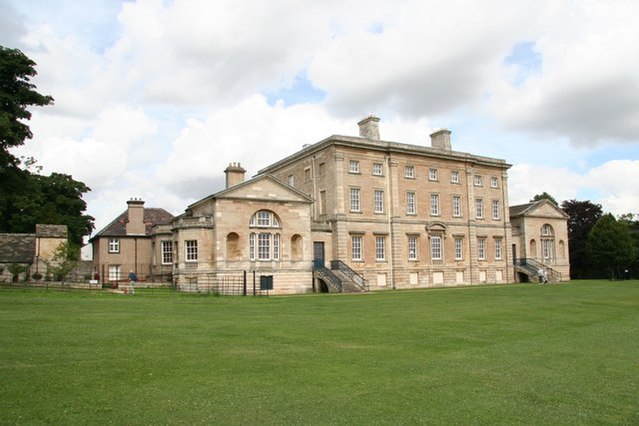
Cusworth Hall: Butterflies and Bumble Bees, and what the Butler saw!

If you happen to be passing CUSWORTH HALL near Doncaster today, be sure to check out their BUTTERFLIES AND BUMBLE BEES event this afternoon. The weather seems to be fine today, in spite of a spot of summer rain earlier!


Cusworth Hall near Doncaster

Boring old M.E./CFS has spat on my attendance chances, but don't miss yours!


I have a bit of a vested interest in Cusworth. My poor long-suffering friends and family will know this by heart, but in case you don't, my link is this: my paternal great gran, twin Eliza Barrass, nee Wright (1857-1905) had a sister Lucy, the baby of the family born in 1865.

 Lucy married the love of her life, Charles Betts, on 22nd December 1890 in her native Warmsworth, at the little church now demolished and its site entombed under the M1 motorway! 

Charles became the butler ("You rang, Milady?") to Lady Isabella Battie-Wrightson, her ladyship at Cusworth in the early 20th century. Lady Isabella presided over the Hall in the last of its glory days before it passed after her death to the last squire, Robert Cecil Battie-Wrightson, pictured here in Doncaster:


Robert Cecil Battie-Wrightson in Doncaster


 Charles Betts, a dapper little man, judging by the existing photos, came originally from Thorne and moved to Warmsworth where he met and married my great grandaunt Lucy. As butler to Lady Isabella, Charles moved into The Lodge, the gatehouse at Cusworth with his family.

They can be seen outside the Lodge c1908. In this photo, you can see great grandaunt Lucy (who sadly died shortly after this photo was taken, aged only 42, of colon cancer and cardiac failure in Doncaster Royal Infirmary), their daughter Mary Ann, who became a housemaid at the Hall, and Charles himself.

Lucy Betts nee Wright, my great gran Eliza Barrass's youngest sister, her daughter Mary Ann and husband Charles circa 1908 outside their home, The Lodge of Cusworth Hall. The Hall itself is visible though the gateway arch, while the Betts family lived rather more humbly behind those net curtains! The original photo of which this is only a scan, can be found on p 42 of the wonderful guidebook 'Cusworth Hall and the Battie Wrightson Family'  and remains copyright of its author Gordon Smith.  I was overjoyed and overwhelmed to discover it quite by sweet serendipity while researching my own family history.


Daughter Mary Ann worked at Cusworth Hall until after her marriage to Richard Ormerod Walshaw in 1936. The Betts family is mentioned in some of the excellent Cusworth guidebooks available around Doncaster, including the one that includes these photos, and another,  'Caring for Cusworth: servants recall a bygone era...' by Alison Morrish, the Curator at Cusworth when that book was produced in 1982. I bought mine, giddy with joy as I spotted the name Betts and this photo of Lucy looking the very image of a Barrass, at Doncaster Museum and Art Gallery .

Another photo in Gordon Smith's book, shows Charles (if I'm recognising his distinctive features rightly!) at Lady Isabella's right hand side, enjoying one of the Hall's famous fancy dress balls before the Great War. Her Ladyship is enthroned as a rather magnificent Britannia! 


Fancy Dress Party at Cusworth Hall prior to WW1, showing Lady Isabella and everyone on the Cusworth Estate, including my ancestors the Betts family. Scan of original photo on p 43 of 'Cusworth Hall and the Battie-Wrightson Family' copyright Gordon Smith, Doncaster 1990.


During the First World War, Charles Betts was caught on camera when Lady Isabella entertained the King's Own Yorkshire Light Infantry at Cusworth. My paternal grandfather, Bruce Aaron Barrass, (1891-1973) was in the same regiment.  I wish among granddad Bruce's endless loquacious stories of the past, which so fascinated me as a child, he could have spoken about his uncle Charles, butler at Cusworth Hall! Instead I had the fun of discovering this rich vein of ancestry for myself!

Housemaid, handyman and my great granduncle Charles Betts the Butler at Cusworth Hall, c 1910 (photo detail from p 41 of 'Cusworth Hall and the Battie Wrightson Family' original photo copyright Gordon Smith, Doncaster 1990)

If like me, you've missed those bees and butterflies, don't waste the opportunity through the summer of spending some time with your family, or just relaxing on your own, exploring Cusworth's beautiful and interesting Hall set in its peaceful rolling grounds with magnificent trees, lawns and soothing water features. 


Cusworth Hall is one of the real precious jewels in Doncaster's battered but beautiful crown!

Some more info on this link


and on Cusworth Hall's own excellent website: http://www.cusworth-hall.co.uk/

Friday, 28 May 2010

Captain Pegleg in the loo and all the merry Barrass crew

Photo: Clifton Park, Rotherham, South Yorkshire, UK

Recently, I managed to attend a lunchtime talk at Clifton Park Museum, by a wonderful man called Jim Wilson about "Humber Keels". As friends will know, my Barrass roots go way back on the canals of Yorkshire. Generations of my ancestors were keelmen and women, master mariners, captains, mates, sailmakers, ship's carpenters and just about every other occupation associated with living around ports and inland waterways.It was surreal to hear Jim, who didn't know me from Adam (or Popeye!) as he spoke, talking about my Barrass ancestors by name.

He regaled us with tales of my distant Victorian third cousin three times removed, Pegleg Barrass, christened marginally less comically as Horace in Stainforth near Doncaster in 1889. Horace lost a leg as a young man in WW1, something to do with barbed wire, I believe, and with true Yorkshire Barrass grit, made his own wooden leg from boatbuilding offcuts going spare along the canal. Jim was rather scared of him as a child, as he seemed as exotic as Long John Silver to his young eyes! 

Another relative who was a young lass in Stainforth in the 1950s once told me a tale of trying the door of the outside toilet shared by houses along the canal bank there. She rattled the "sneck" (handle) of the toilet door, but found it wouldn't open more than a crack because, as she thought, some prankster had jammed something against the door to stop folk entering. Seeing the obstruction was an old piece of driftwood, she ran off to tell her granny that someone had put a chair leg or a wheelbarrow in the lav! You're ahead of me, aren't you? Yes, it turned out to be our Pegleg sitting quietly on the loo with his wooden leg propped up against the door to repel boarders and ensure a bit of privacy! I told Jim this tale after his talk and we reminisced about the lives of our keel forebears.

When I got home, I looked at some census returns to see where Jim's Wilson family might fit in with my own canal genes. Sure enough, his granny was one of the Parish family, and my first cousin five times removed, Martha Barrass, born in 1814 married David Parish, a boat hauler along the river. Yes, when a horse wasn't available, or on sections of the canal too narrow to set the sails, the heavy barges were attached to a strap around the chest of a man or woman to be hauled along.

On the 1881 census, in the Old Harbour at Sculcoates in Hull, I found many keels moored together. Jim Wilson's great grandparents, James and Lucy Wilson, were there on board their keel "Kate" (named after one of Jim's great aunts, a little girl on the keel at that time) and, moored just two berths along the quay, one of our keels, the "Thistle". "Thistle"'s captain was my great great gran's brother, Thomas Barrass (born in Stainforth in 1839), and his mate was my great great great granddad, Samuel Barrass (b 1816, Stainforth). Also on board were Tom's wife, Mary Ann nee Brooke from Gainsborough and their three children, the youngest of whom, George went on to die in 1916 in WW1, when he was an acting corporal in the 6th battalion of the East Yorkshire Regiment.

Family history never ceases to be a joy, whether it uncovers funny or tragic stories. I have my share of murderers, bigamists, eccentrics, suicides and adventurers but I think our Pegleg is perhaps one the more memorable to the citizens of Doncaster! Cheers, Horace!