Showing posts with label etymology. Show all posts

Tuesday, 10 February 2015

Goatsucker Harvest: Naming names

Seeing a SEAGRAVE grave ( my great great granduncle Solomon's) in Gleadless, Sheffield

It's no secret that family history is to me what sitting in his writing shed was to Roald Dahl - inspirational!

Most characters in "Goatsucker Harvest" I christened with first names and surnames that appear somewhere up my own knotty and gnarly family tree.

A beloved sixth cousin of mine - does anybody but a genealogy buff actually KNOW any of their sixth cousins? - was delighted when she downloaded 'Goatsucker Harvest' onto her Kindle, to discover I'd used the name of her own great grandmother (a distant limb among the seventeen thousand plus individuals on my tree), namely Kerenhappuch. Our real live Kerenhappuch was actually a cockle picker, born in 1843. 

I've no idea what Kerenhappuchs in the real world were called for short as a nickname. I only know how many crazy misspellings officials managed - 'Karen Dappack' being my particular favourite from the 1861 census! The name's biblical, one of Job's daughters in the Old Testament, Keren-Happuch, 'child of beauty' or, less meaningful to us moderns, 'horn of antimony'! 

In 'Goatsucker Harvest', I take the liberty of calling Thirza's great grandmother "Happy" for short. Keren-"Happy"-Happuch's only mentioned when Kezzie (named after Kezia, a distant cousin three times removed, one of my paternal gran's Ilkeston forebears) remembers wearing her mother Happy's corset on her wedding day. Something borrowed, like my ancestor's amazing names!

The Holberry family at the heart of the story are named after my 3x great grandmother Sarah Holberry, a Victorian farmer's wife in Hatfield near Doncaster, the area where the novel's set. Sarah's cousin was the Sheffield Chartist hero Samuel Holberry, who died in York Jail, now the Castle Museum, in 1842 on the treadmill, the same invention attributed to Sir William Cubitt, and mentioned with regret by him as the plot unrolls for his fictional incarnation. 

Similarly, the Kitson clan. My 5x great grandmother Diana "Dinah" Kitson, herself a woman of the Yorkshire waterways, has her name used twice in the book, for the family at Kitson's Windmill and as Thirza's mother's Christian name. Thirza herself is called after several of my own distant cousins.

Darnell borrowed his moniker from the surname of my 4x great grandmother, Dinah Darnell and her Darnell kin from the Lincolnshire wolds and coast. I took especial joy in using this name for the Machiavellian inventor, as "Darnel" is also an old word for "tares" or "weeds" that grow among the wheat, symbolic of the troublesome growth not always fully rooted out until harvest time.

The shadowy "Dr Stenson Seagrave" is called after two of my great grandmothers, Polly Stenson & Alice Seagrave. Alice was niece of the Sheffield seedsman Solomon Seagrave, after whose Victorian plant nurseries several streets in Sheffield are still named (see photo).

Bram takes his unusual name from the East Yorkshire Beharrells who were the kinsmen and women of Sarah Ann Beharrell, married in 1871 to a great great granduncle of mine, moving from Hull to live in Rotherham, not far from the canal.

Even "Thistle" is named after the keel on which my 3x great granddad and his son were master and mate on the night of the 1881 census, in Albert Dock in Hull (watermen who inspired me to make Jack Holberry and his family spring to life in 'Goatsucker Harvest.')

So it goes, with nearly every name you read in the 'Goatsucker Harvest' story. Hidden thankful tributes to the ones gone before who inspire me.

Chester, Charlesworth, Brunyee, Hanson, Jacques, Canner, Wraith, Poskitt, Salkeld, Foljambe and the rest. Echoes of the genes that still sing in my blood; family, kinsfolk and their neighbours along the canals and moors of the West Riding of Yorkshire, the Isle of Axholme and beyond, down the centuries.

They aren't the strangest or the silliest names on my tree. Not by far! That honour would perhaps belong to Garnish Broadbent, Kelita Hall (both male) or poor old Original Bottom. But that's for another story!


Thursday, 29 September 2011

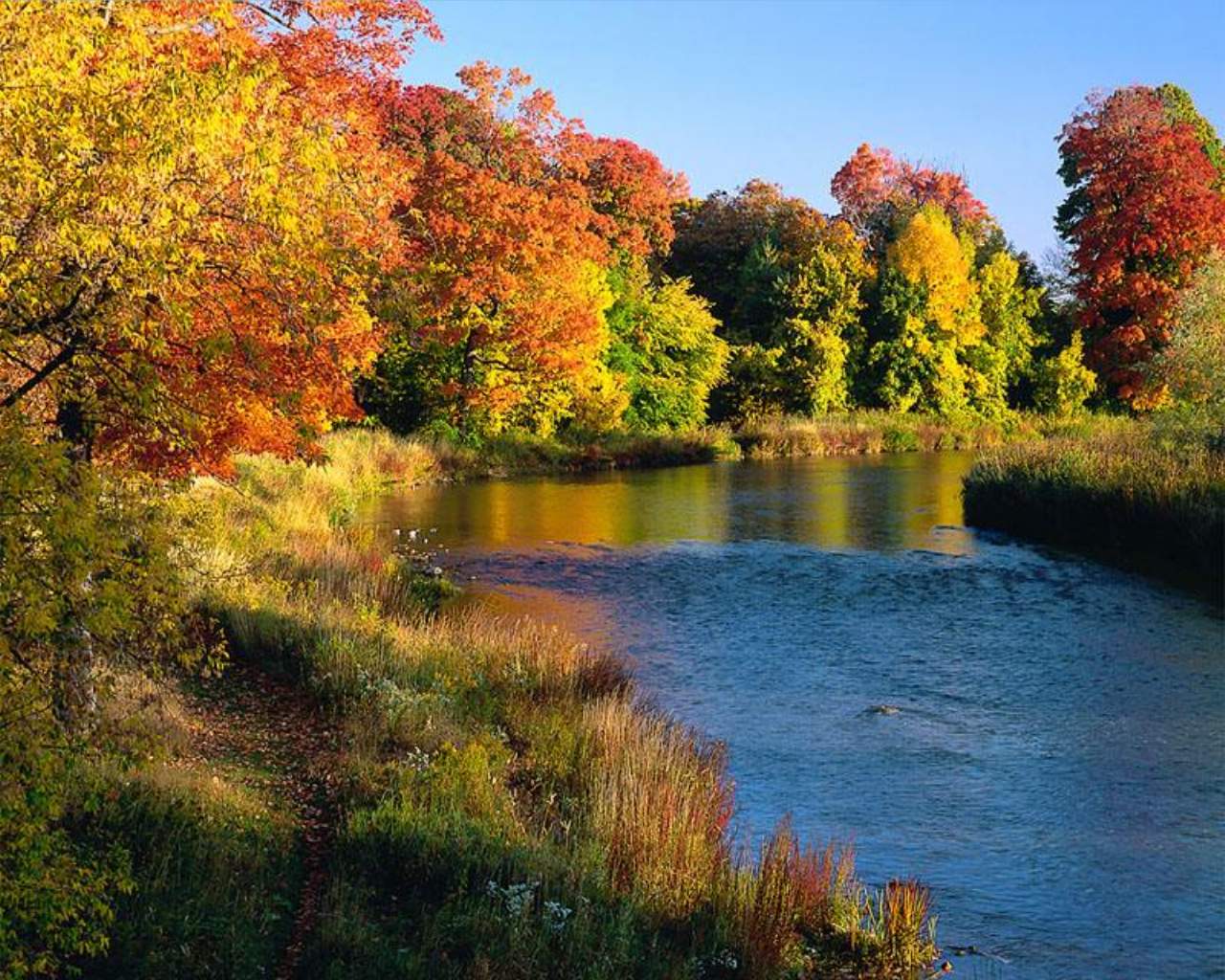
Falling for Autumn: Or is it St Martin's Summer?

Reality check: is this an Indian Summer? - Polly Curtis in today's "The Guardian" online
I reckon many of us have been debating this. Is this or isn't it what we used to call an "Indian Summer"?


The UK Meteorological Office has slapped our wrists several times in recent days.


We can't call this an Indian Summer they say.


Indian Summers can't happen in September, we learned to our surprise. They have to occur after the first frosts near the end of October or early November.

 This, in spite of having spent our lives in blissful ignorance of the fact we needed permission to celebrate an autumn warm spell in whatever way we chose, under whatever name, whenever we noticed it. After all, surely it's the public's own words and traditions that put any concept into the culture in the first place? This delightful phenomenon was called an Indian Summer long before the Met Office, or the Governments who fund it, had us in a headlock over semantics!

The Guardian's Polly Curtis in the article linked above, quotes one of the earliest uses of the term, from Frenchman John de Crevecoeur, in 1778: 

'Sometimes the rain is followed by an interval of calm and warmth which is called the Indian Summer; its characteristics are a tranquil atmosphere and general smokiness. Up to this epoch the approaches of winter are doubtful; it arrives about the middle of November, although snows and brief freezes often occur long before that date.'

It's been suggested the phrase is rather a disparaging reference to Native Americans perpetrated by the incoming European settlers, who branded the native dwellers as untrustworthy for breaking "treaties" with the invaders of their territories. Hence the unseasonal warm spell was deemed to be similarly breaking the settled pattern of the weather getting colder as the winter solstice approached.
 I, for one, wouldn't be comfortable to use any term, whether deemed "non-PC" or not that could cause offence to those with a reason to feel aggrieved by certain loaded phrases. But it seems far from clear that this is the origin of the name for this meteorological phenomenon. The jury seems to be out. Or not to have realised they had been convened.


Wikipedia confidently states here:

Depending on latitude and elevation, the phenomenon can occur in the Northern Hemisphere between late September and mid November. 


In many ways, the Wiki is the modern voice of popular cultural understanding, for all its limitations. So late September doesn't seem disqualified here! Wherever the Met Office has arbitrarily decided to draw a line in the sand.


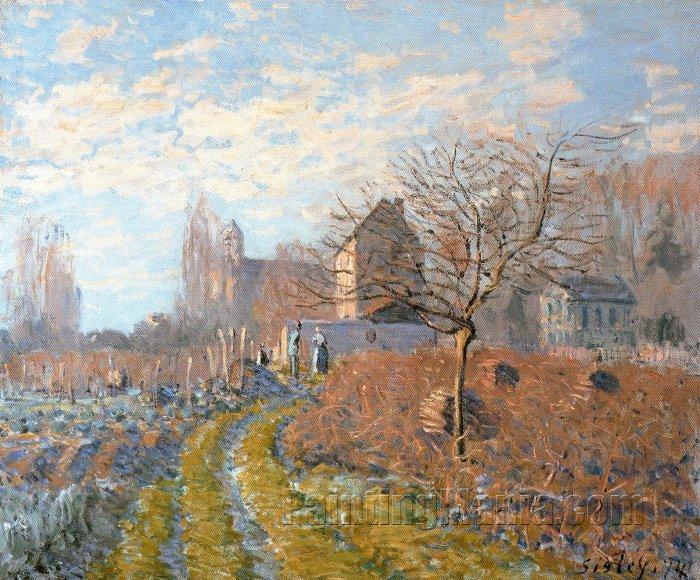
Hoar Frost - St. Martin's Summer (Indian Summer) by British painter Alfred Sisley 1874 (Oil on Canvas. Private Collection)


Here in England, an autumnal warm snap was formerly called a "St Martin's Summer", until gradually by the 20th century, along with "OK" and  unfamiliar spellings and pronunciations of the English language picked up from GIs and Hollywood talkies, the phrase "Indian Summer" overtook older traditional expressions.

Looking at the numerous different names for the phenomenon from round the globe shows there's a huge collection of terms we can choose from. Some maybe less than flattering, many just sublime:

Little Summer of the Quince, Old Ladies' Summer, Summer of Old Ladies, Crone's Summer (non-PC for self-respecting modern women!), Gypsy Summer, Gypsy Christmas, St Theresa's Summer, All Hallown Summer, Return of Summer, Flashback of Summer, or the Chinese phrase meaning "a tiger in autumn", humankind has always wanted to speak about it and celebrate it!

Whatever it should be called, it's a joy when it happens, in my book. Because it's here, it's hot, it's glorious! Beautiful soft, golden days, melting frigid  dawns and evenings after the tilt of the autumnal equinox. Lighting up the dying leaves and showing off their twilight splendour. Giving us hope that it's not so very long, after all, till spring.